Understanding Co-payment and Deductibles in Health Insurance
Learn how co-payment clauses and deductibles affect your out-of-pocket expenses and claim reimbursements
Key Takeaways
- Co-payment reduces your premium but increases out-of-pocket costs during claims
- Deductibles are the amount you pay first before insurance kicks in
- Review your policy terms carefully to understand your financial exposure
What is Co-payment (Co-pay)?
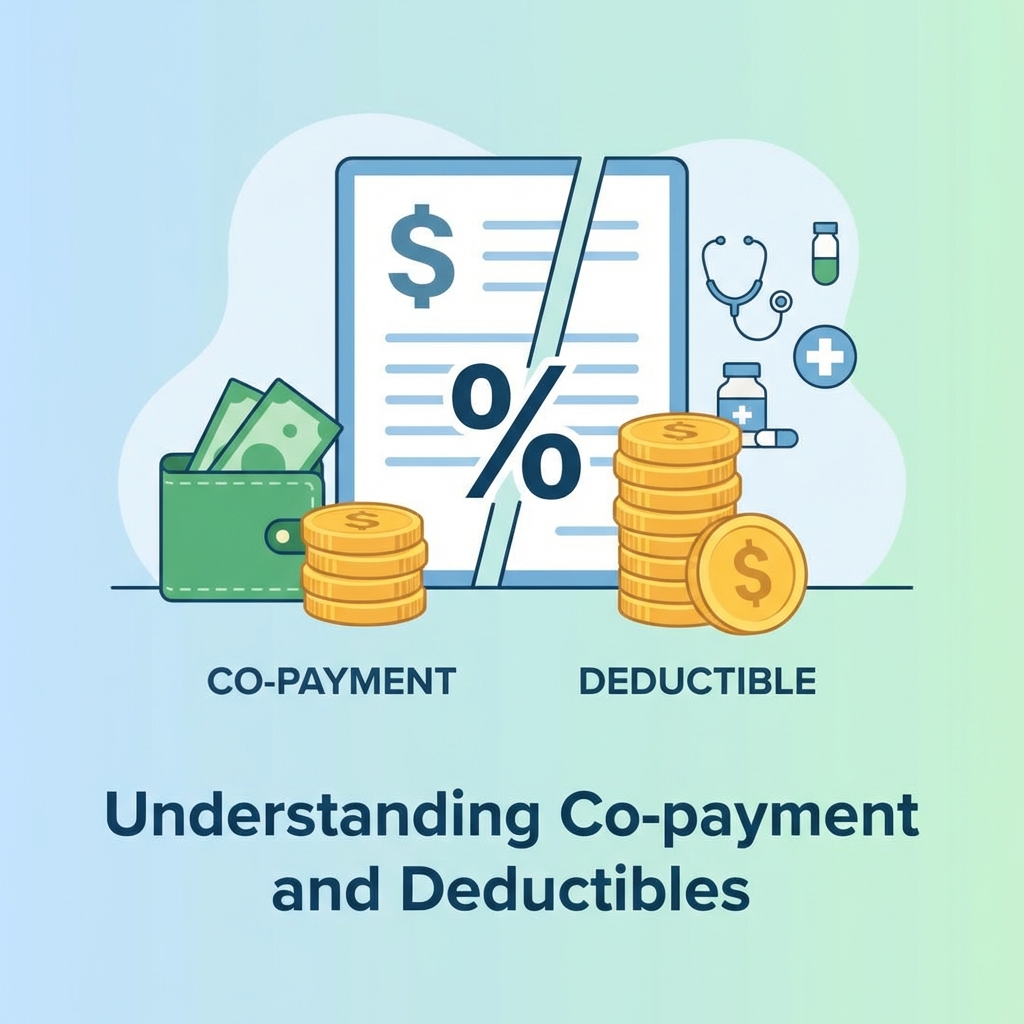
Co-payment is a cost-sharing mechanism where you pay a fixed percentage of every claim amount, while the insurance company pays the rest. It's expressed as a percentage (e.g., 10%, 20%, or 30%).
How Co-payment Works - Example
Scenario
- • Hospital Bill: ₹2,00,000
- • Co-payment Clause: 20%
Payment Split
- • You Pay: ₹40,000 (20%)
- • Insurer Pays: ₹1,60,000 (80%)
When is Co-payment Applied?
- Senior citizen plans: Often have mandatory 10-30% co-pay
- Pre-existing diseases: Higher co-pay may apply for PED-related claims
- Non-network hospitals: Some plans charge co-pay for reimbursement claims
- Specific treatments: Certain procedures may have separate co-pay clauses
What is a Deductible?
A deductible is a fixed amount you must pay out of your own pocket before the insurance coverage starts. It's expressed as a specific rupee amount (e.g., ₹5,000 or ₹10,000).
How Deductible Works - Example
Scenario
- • Hospital Bill: ₹50,000
- • Annual Deductible: ₹5,000
Payment Split
- • You Pay First: ₹5,000
- • Insurer Pays: ₹45,000
Note: Deductibles are usually applied once per policy year. After you've paid the deductible amount, subsequent claims in that year are fully covered (subject to other terms).
Co-payment vs Deductible: Key Differences
| Feature | Co-payment | Deductible |
|---|---|---|
| How it's calculated | Percentage of claim | Fixed amount |
| When applied | Every claim | Once per year (usually) |
| Impact on large claims | Higher out-of-pocket | Limited to deductible amount |
| Impact on premium | Reduces premium | Reduces premium |
Should You Choose a Plan with Co-pay/Deductible?
✓ Advantages
- Lower premium costs
- Discourages unnecessary claims
- Good for healthy individuals with infrequent hospitalizations
- Makes insurance more affordable
✗ Disadvantages
- Higher out-of-pocket during claims
- Co-pay on large claims can be substantial
- Not ideal for those with chronic conditions
- May delay seeking medical care
Need Help Understanding Your Policy?
Our experts can help you understand co-pay clauses and find the right plan for your needs
Disclaimer
Co-payment and deductible terms vary by insurer and policy. Always read your policy document carefully to understand the exact terms applicable to your coverage. This information is for educational purposes only.