
Term Plan vs Saving Plan
Understand the fundamental difference between pure protection and investment-linked insurance
Learn MoreHealth Insurance Explained
Complete guide to medical coverage, family floater, critical illness and more
Learn MoreKeyMan Insurance
Protect your business from financial loss due to key employee death or disability
Learn MoreCorporate Insurance
Group health, life, and liability insurance solutions for businesses
Learn MoreTerm Plan vs Saving Plan: What's the Difference?
This is one of the most confusing decisions in insurance. Let's break it down in simple terms so you can choose what's right for your family.
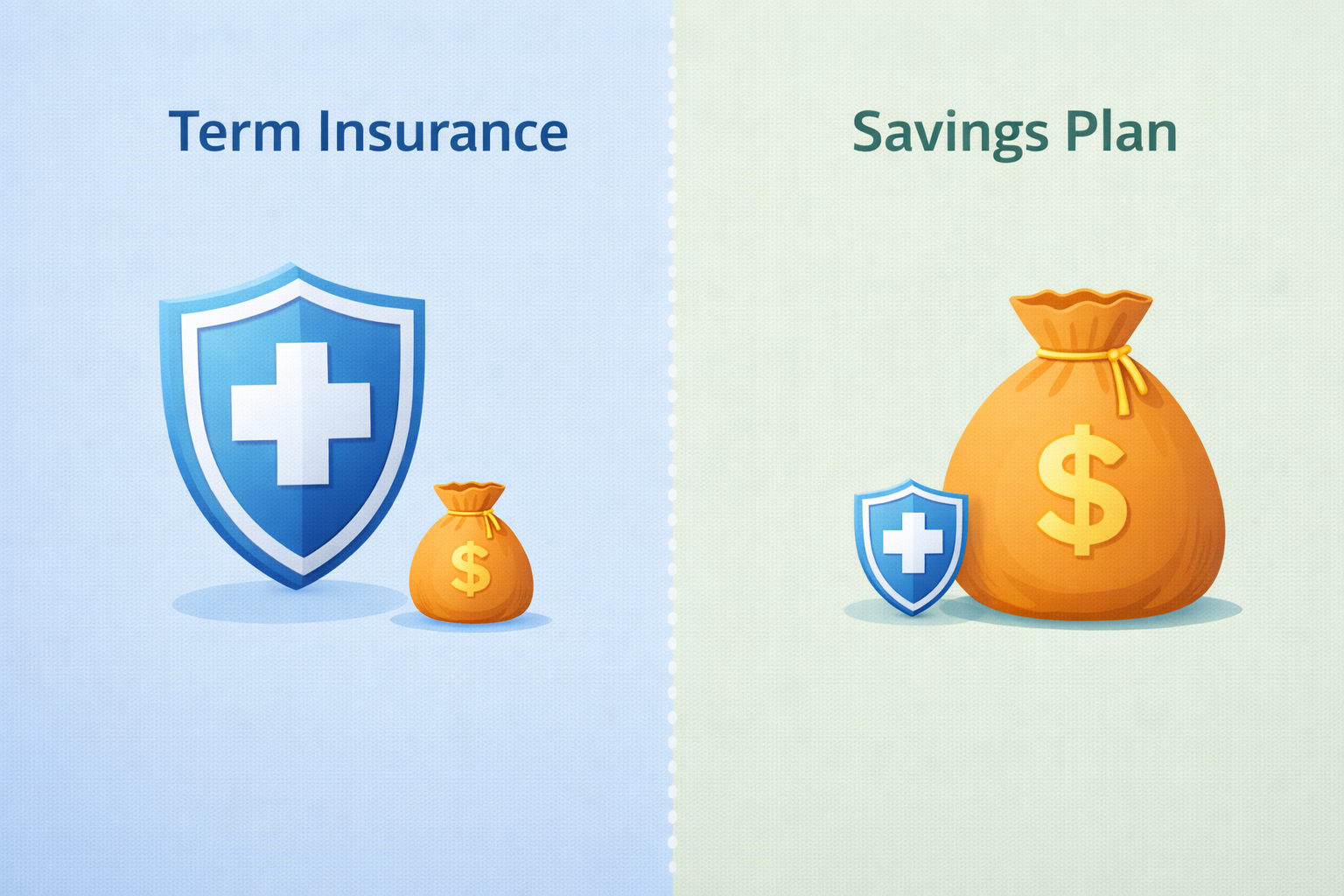
What It Is:
Pure life cover with no investment component. Your family gets a lump sum if you die during the policy term.
Advantages:
- ✓Very Low Premium: ₹8,000-12,000/year for ₹1 crore cover
- ✓Maximum Protection: Get 10-15x more coverage for same premium
- ✓Simple & Transparent: No complex calculations or hidden charges
- ✓Tax Benefits: Premium deduction under Section 80C
Disadvantages:
- ✗No Maturity Benefit: If you survive the term, you get nothing back
- ✗No Investment Returns: Purely for protection, not wealth creation
Best For:
Young families who need maximum protection at lowest cost. Ideal if you have home loans, dependents, or limited income.
What It Is:
Combines life insurance with savings. Part of premium goes to insurance, part to investment. You get money back at maturity.
Advantages:
- ✓Maturity Benefit: Get guaranteed returns even if you survive
- ✓Forced Savings: Disciplined way to save for long term goals
- ✓Tax Benefits: Premium deduction + tax-free maturity (under 80C & 10(10D))
Disadvantages:
- ✗Very High Premium: 5-8x more expensive than term insurance
- ✗Low Coverage: ₹50,000-80,000/year for only ₹10-20 lakhs cover
- ✗Poor Returns: 4-6% annual returns, lower than mutual funds or FD
- ✗Lock-in Period: Heavy penalties if you surrender early
Best For:
People who struggle to save regularly and want guaranteed returns. Not ideal if you need high coverage or better investment returns.
| Feature | Term Insurance | Savings Plan |
|---|---|---|
| Annual Premium | ₹10,000/year | ₹10,000/year |
| Coverage Amount | ₹1 Crore | ₹10-12 Lakhs |
| Policy Term | 30 years | 20-25 years |
| Maturity Benefit (if survive) | ₹0 (some plans offer premium return) | ₹2.5-3 Lakhs (guaranteed) |
| Investment Returns | N/A - Pure protection | 4-6% per year |
| Best Use Case | Maximum family protection | Forced savings + moderate cover |
Expert Recommendation
For 90% of people, Term Insurance + Separate Investments (mutual funds, PPF, FD) is far better than savings plans. You get maximum protection + better returns.
Example: Buy ₹1 crore term for ₹10,000/year + invest remaining ₹40,000 in mutual funds (8-12% returns) instead of paying ₹50,000/year for a ₹15 lakh endowment plan.
Understanding Health Insurance in India
Health insurance covers your medical expenses during hospitalization. With rising healthcare costs (10-15% annually), it's no longer optional – it's essential for every family.

Individual Health Plan
- • Separate policy for each person
- • Each member has their own sum insured
- • Higher total premium
- • Better for families with elderly members
Family Floater (Recommended)
- • One policy covers entire family
- • Shared sum insured across all members
- • 30-40% cheaper than individual plans
- • Best for young families (no senior citizens)
Example:
Family of 4 (Self, Spouse, 2 Kids) – Individual plans: ₹45,000/year | Family Floater ₹5L: ₹15,000/year (Save ₹30,000!)
Provides lump sum payout on diagnosis of serious diseases like cancer, heart attack, stroke, kidney failure, etc.
Why You Need It:
- • Covers treatment costs not covered by regular insurance
- • Replaces lost income during recovery
- • Typically covers 30-40 critical illnesses
- • Can be added as rider to term insurance
Cost Example:
₹50 lakh critical illness cover costs ₹8,000-12,000/year for a 30-year-old. Worth it if there's family history of serious diseases.
Room Rent Limit
Maximum daily room charges covered. If limit is ₹2,000/day but you take ₹4,000 room, your entire claim reduces by 50% (proportionate deduction). Always choose "No Capping" if affordable.
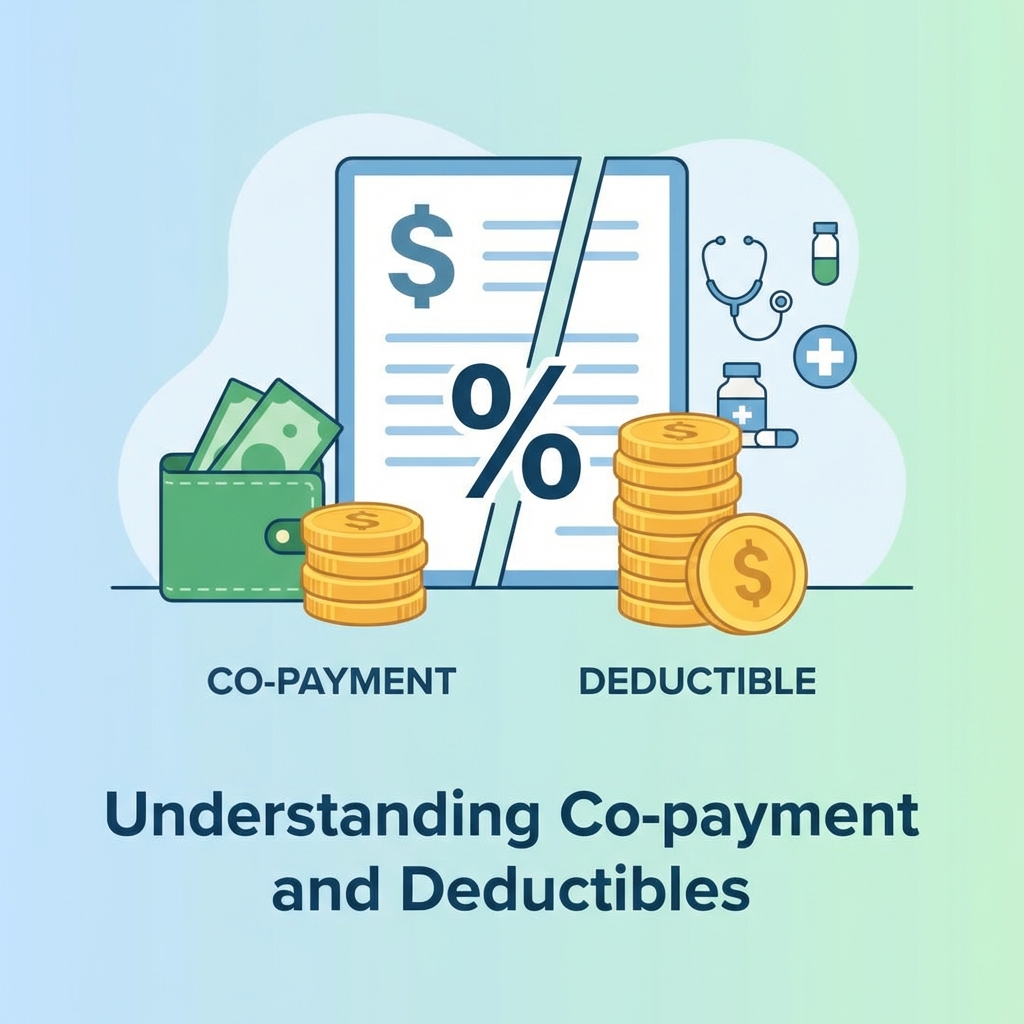
Co-Payment / Deductibles
Percentage you pay from your pocket on every claim. Example: 20% co-pay means if bill is ₹1 lakh, you pay ₹20,000, insurance pays ₹80,000.
Wait! Check for "Wait periods" and "Daycare Procedures" as well.
How Much Health Coverage Do You Need?
Minimum: ₹5 lakhs per person (₹10L family floater for 4 members)
Recommended: ₹10-15 lakhs per person in metro cities
Super Top-Up: Buy base policy of ₹5L + super top-up of ₹20L for comprehensive coverage at lower premium
KeyMan Insurance: Protecting Your Business
KeyMan Insurance protects your business from financial loss due to death or disability of key employees whose skills, knowledge, or leadership are critical to company success.

The company buys life insurance on a key employee. If that person dies or becomes disabled, the company receives the payout to:
- • Recruit and train a replacement
- • Cover loss of revenue during transition
- • Pay off debts or operating expenses
- • Reassure investors and lenders
- ✓Startups: Founders are irreplaceable in early stages
- ✓Small Businesses: Heavy dependence on 1-2 key people
- ✓Professional Firms: Partners, senior consultants, rainmakers
- ✓Family Businesses: Key family members running operations
Calculation Formula:
Method 1 (Income-Based): 5-10x the key person's annual salary + benefits
Method 2 (Profit Contribution): Estimated profit contribution of the key person over next 3-5 years
Method 3 (Replacement Cost): Cost to recruit + train replacement + business loss during transition
Example:
CTO earning ₹30 lakhs/year who drives product development: Recommended coverage ₹1.5-3 crores (5-10x salary) to cover recruitment, training, and lost productivity.
Premium Payment: Deductible as business expense under Section 37(1) of Income Tax Act
Claim Payout: Received by company is taxable as business income
Note: Tax treatment can vary. Consult a tax advisor before purchasing KeyMan insurance.
Corporate Insurance Solutions
Group insurance policies for businesses to protect employees and the company. Essential for attracting talent and complying with labor laws.

Medical insurance for all employees under one master policy. Required by many state labor laws and a key employee benefit.
Benefits for Company:
- • Premium 40-60% cheaper than individual plans
- • No medical check-ups required for employees
- • Tax deductible as business expense
- • Improves employee satisfaction and retention
- • Pre-existing diseases covered from day 1
Coverage Options:
- • Employees only vs Employees + Family
- • Sum insured: ₹2L to ₹10L per person
- • Top-up coverage for senior management
- • Maternity, dental, vision add-ons
- • Annual health check-ups included
Typical Cost:
₹5,000-8,000 per employee per year for ₹3 lakh sum insured (employees only). ₹8,000-12,000 for employee + spouse + 2 children.
Life cover for all employees. Provides financial security to employee families and demonstrates company's commitment to welfare.
Standard Coverage Formula:
- • Junior staff: 1-2x annual salary
- • Mid-level: 2-3x annual salary
- • Senior management: 3-5x annual salary
Key Features:
- • No medical exams for groups of 50+ employees
- • Accidental death and disability riders available
- • Coverage active while employed, ceases on exit
- • Premium as low as ₹200-500 per lakh per year
Protects company directors and officers from personal financial liability for alleged wrongful acts in managing the company.
What It Covers:
- • Shareholder lawsuits
- • Employment disputes and discrimination claims
- • Regulatory investigations (SEBI, RBI, etc.)
- • Breach of fiduciary duty claims
- • Defense costs and legal fees
Recommended for: Startups raising funding, companies with external investors, publicly listed companies, and businesses in highly regulated industries.
Covers legal liability arising from professional services, errors, omissions, or negligence. Also called Errors & Omissions (E&O) insurance.
Who Needs This:
- • IT/Software companies
- • Consultants and advisors
- • Architects and engineers
- • Healthcare providers
- • Financial advisors
- • Legal firms
Example Scenarios:
- • Software bug causes client financial loss
- • Design error leads to project failure
- • Incorrect advice results in client loss
- • Data breach due to security lapse
Need Corporate Insurance for Your Business?
We help businesses of all sizes design comprehensive insurance programs tailored to their industry, team size, and budget. Get expert guidance on compliance, coverage, and cost optimization.
Still Have Questions?
Every family's insurance needs are unique. Talk to our experts to get personalized advice on what's right for you – completely free, no obligations.